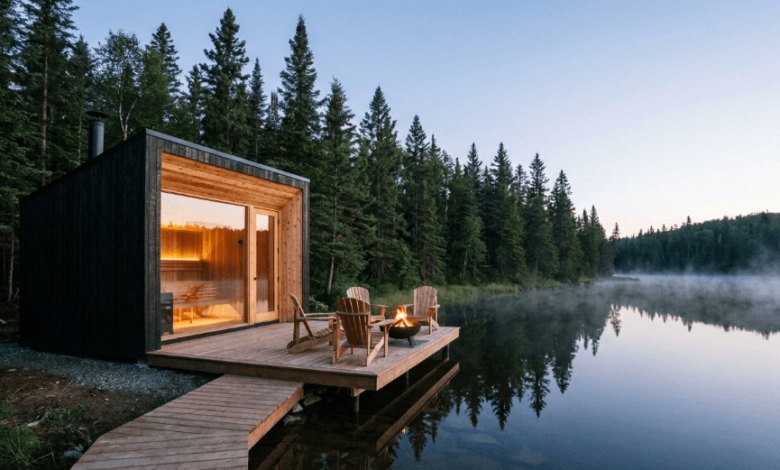
A pre-cut DIY panel kit typically saves 1,000 to 3,000 dollars in assembly labor compared with a professional install, but that gap narrows once electrical work, foundation prep, and the real time cost of a first-time build are factored in. The honest answer for most budgets is that DIY makes sense for a straightforward cabin or barrel kit on a level, accessible site, and professional install earns its cost back on anything with tricky access, a poured slab, or a heater that needs a long electrical run.
What a DIY Kit Actually Involves
Most kits sold for home assembly arrive as pre-cut tongue-and-groove wall panels, a roof section, a door with pre-hung hardware, and a set of bench boards, designed to go together with hand tools and basic carpentry skill rather than custom framing. A cabin or barrel kit with two people working typically takes one to two full weekends to assemble, not counting foundation work done ahead of time or the electrical hookup done separately. The panels themselves are usually the easy part; getting the base level enough that panel seams close tightly is where first-time builders lose the most time. Most kits also include the fasteners, sealant, and roofing material needed for a complete build, though it is worth confirming this against the parts list before assuming nothing extra needs to be purchased separately.
Where the Real Cost Savings Show Up
The labor a professional installer charges for assembly, typically in that 1,000 to 3,000 dollar range depending on size, site access, and regional labor rates, is the piece a DIY build avoids outright. What it does not avoid is the foundation and electrical work, both of which carry real cost and, in the case of wiring, real safety stakes regardless of who assembles the wood structure. A realistic DIY budget accounts for a gravel pad or slab and a licensed electrician’s time even if the panels themselves go up without paid help.


The Electrical Work Is Not Optional Either Way
Most full-size electric sauna heaters need a dedicated 240V circuit, the kind an electric dryer or range uses, sized to the heater’s amperage and installed to code. Some homeowners can legally pull a permit and do this work themselves in jurisdictions that allow it, but most heater manufacturers still require licensed installation to keep the parts warranty valid, and an undersized or improperly grounded 240V circuit on a sauna heater is a genuine fire risk, not a minor technicality. This is the one part of the project where cutting the cost corner is rarely worth it, DIY panel kit or not.
Where DIY Assembly Tends to Go Wrong
The most common issue with self-assembled kits is not the woodworking itself but the foundation underneath it. A base that is off level by even a small amount can leave panel seams that do not close flush, which lets heat and humidity escape at the joints and is difficult to correct after the walls are up. Careful, patient leveling before the first panel goes up is the single step that most determines whether a DIY build performs like the pre-built showroom version or falls short of it. A four-foot level and a bit of patience shimming the base before the first panel goes on catches most of this problem before it becomes permanent, and it is worth the extra hour compared with assuming a poured slab or gravel pad is automatically level just because it looks flat.
Where a Professional Install Earns Its Cost
A crew that installs saunas regularly moves faster, usually a single day or two versus a weekend or more for a first-time DIY build, and brings experience with foundation leveling, panel alignment, and the electrical trade work in one coordinated job. For a site with difficult access, a sloped yard, or a homeowner who would rather not spend two weekends on a build, the labor cost buys back time and reduces the risk of a foundation mistake that is expensive to fix later. Comparing both routes side by side against the actual unit prices is easier once you can see the full range of kit and pre-assembled options in one place; it is worth taking a few minutes to browse the collection before deciding which build path fits the budget and the weekend availability on hand.
Permits and Local Code: Often Overlooked
Many jurisdictions require a building permit for any structure over a certain size or one that includes a dedicated electrical circuit, and a backyard sauna often crosses that threshold even though it does not feel like major construction. Skipping the permit step is a common DIY shortcut, but it can complicate a future home sale if a buyer’s inspector flags an unpermitted structure, and some homeowner’s insurance policies specifically exclude damage tied to unpermitted electrical work. A professional installer typically handles or at least flags permit requirements as part of the job, while a DIY build leaves that research to the homeowner. Checking with the local building department before ordering materials, not after the panels arrive, avoids a situation where a nearly finished build has to be modified to meet setback or electrical code requirements discovered late.
Why Getting It Assembled Right Matters Beyond the Build Day
Regular sauna use has been associated with cardiovascular and general health benefits in review literature covering populations who bathe consistently over years, though this evidence is observational, showing association rather than proof that the sauna itself causes the outcomes measured (see References). A sauna with gaps at the seams or a marginal electrical hookup tends to underperform on heat retention and safety in ways that make it less pleasant to use regularly, which is the variable the research ties most closely to any benefit. Getting the install right the first time, DIY or professional, is what turns a purchase into something that actually gets used for years.
Frequently Asked Questions
How much does a DIY sauna kit typically save over a professional install? Assembly labor usually runs 1,000 to 3,000 dollars depending on size and site conditions, which is roughly what a self-install saves, though electrical work is a separate cost either way.
Can I legally wire the sauna heater myself to save money? Many jurisdictions allow permitted homeowner electrical work, but most heater manufacturers require licensed installation to keep the warranty valid, and undersized wiring is a real fire risk.
How long does a DIY panel kit typically take to assemble? With two people, typically one to two full weekends, not counting foundation prep or electrical work, versus a single day or two for a professional crew.
What is the most common DIY mistake with a sauna kit? Skipping or rushing the foundation and leveling step, since misaligned panel seams on an unlevel base let heat and steam escape and are hard to fix later.
Does a professional install come with any warranty advantage? Sometimes. Some manufacturers offer fuller coverage when installation is documented by a certified installer, removing uncertainty about assembly and wiring.
References
- Does the Combination of Finnish Sauna Bathing and Other Lifestyle Factors Confer Additional Health Benefits? A Review of the Evidence, Mayo Clinic Proceedings, 2023.
- Effects of heat and cold on health, with special reference to Finnish sauna bathing, American Journal of Physiology – Regulatory, Integrative and Comparative Physiology, 2018.
- Cardiovascular and Other Health Benefits of Sauna Bathing: A Review of the Evidence. Mayo Clinic Proceedings, 2018. https://pubmed.ncbi.nlm.nih.gov/30077204/
- By Melissa Ortega